
Wake Forest Chemistry Faculty Explore the Importance of Molecular Handedness in Medicine
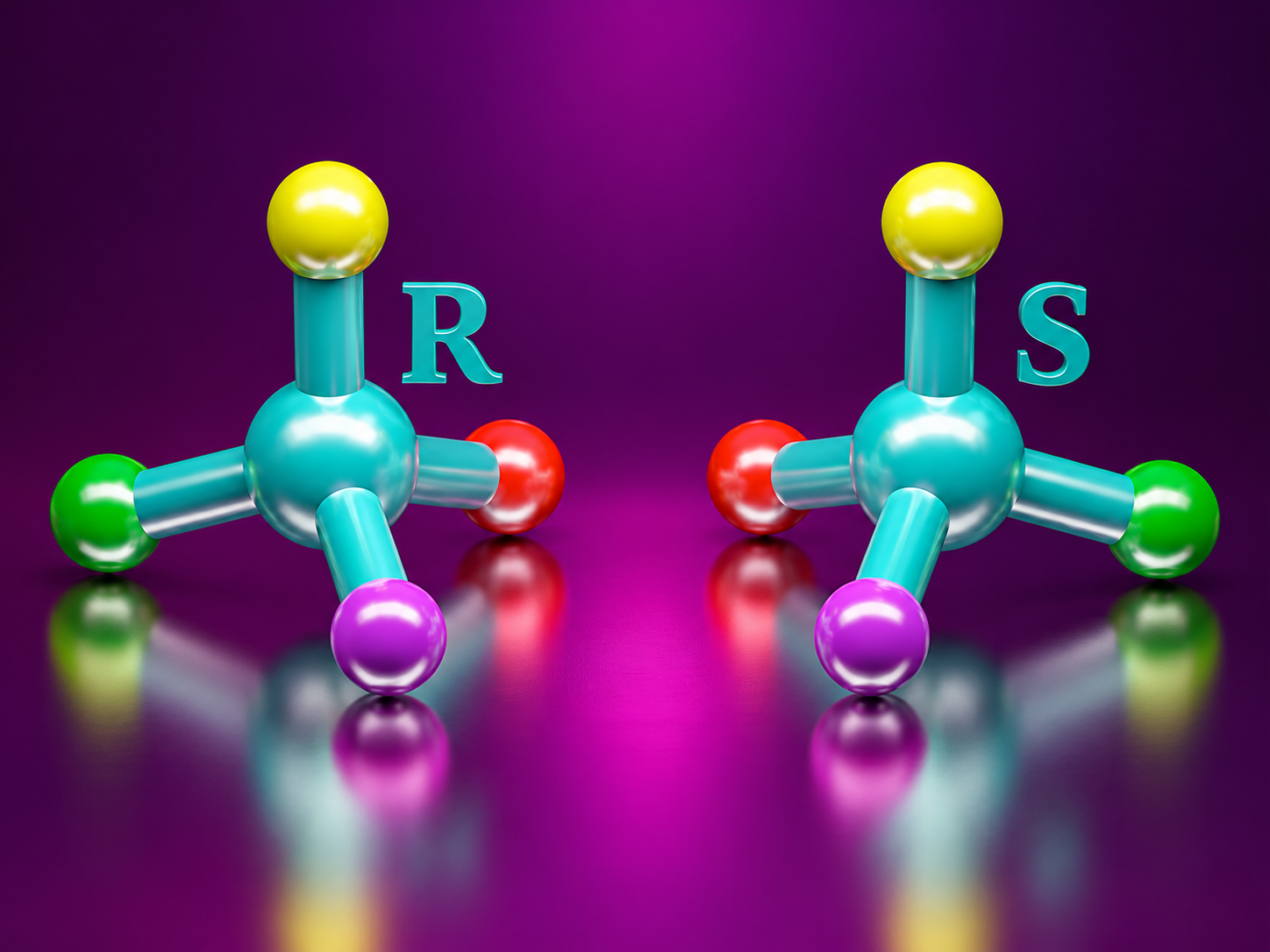
Wake Forest University chemistry professors Cédric Schaack and Mallory Green recently contributed an article to The Conversation exploring how a molecule’s “handedness,” or chirality, can determine its biological activity and effectiveness as a medication. Inspired by the 2026 Nobel Prize in Chemistry, the article explains how molecules that are mirror images of one another can behave very differently in the human body. Much like our left and right hands, these molecules may appear nearly identical but cannot be perfectly superimposed. This seemingly subtle difference can have profound consequences for drug development, biological processes, and human health.
Schaack and Green illustrate the importance of chirality through familiar examples, including ibuprofen, the Parkinson’s disease treatment L-DOPA, glucose, and the tragic history of thalidomide. Their article highlights how understanding and controlling molecular handedness has helped chemists develop safer, more effective pharmaceuticals while opening new possibilities in materials science and emerging technologies. The discussion also connects fundamental chemical discoveries to broader questions about the molecular origins of life and the future of scientific innovation. Read the full article in The Conversation.